

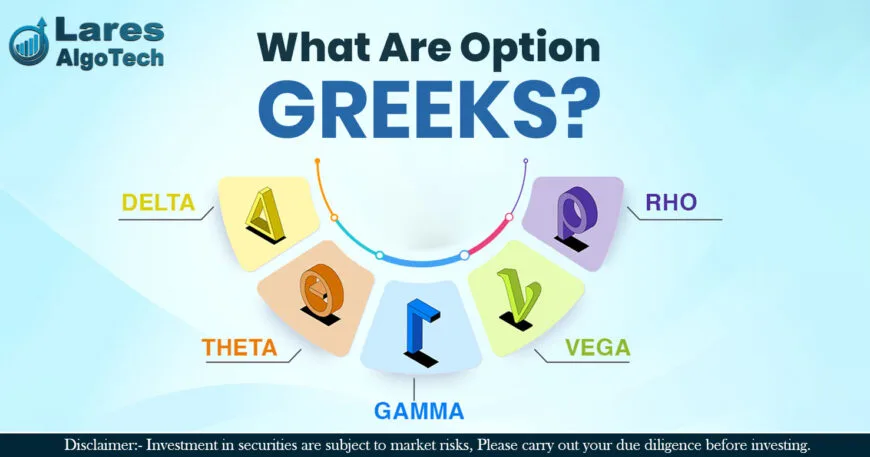
What Are Option Greeks? A Beginner’s Guide to Delta, Gamma, Theta, Vega
Introduction: Why Every Options Trader Must Understand Greeks
Options trading is not just about predicting whether the market will go up or down — it is a complex combination of probability, time, and volatility. In recent years, options trading in India has witnessed massive growth, especially among retail traders. Instruments like Nifty and Bank Nifty options have become some of the most actively traded assets in the market.
However, despite this growth, a large number of beginners consistently lose money. The primary reason is a lack of understanding of how options actually work. Most traders focus only on dirfection — assuming that if the market goes up, call options will profit, and if it goes down, put options will profit. But in reality, option pricing is influenced by multiple factors beyond just price movement.
This is where Option Greeks come into play.
Option Greeks are mathematical tools that measure how sensitive an option’s price is to different variables such as changes in the underlying asset, time decay, and market volatility. As explained in , Greeks act like a dashboard that helps traders understand how different market conditions impact their positions.
Without understanding Greeks, options trading becomes nothing more than speculation.
Professional traders do not rely on guesswork — they rely on calculated risk. Greeks help traders answer critical questions such as:
- How much will the option price move if the market moves?
- How much value will be lost over time?
- How will volatility impact the trade?
Whether you are an intraday trader or a positional trader, Greeks provide clarity and structure to your decision-making process.
At Lares Algotech, traders are equipped with advanced tools, fast execution, and actionable insights that allow them to trade with precision rather than emotion.
In simple terms
If you understand Greeks, you move from guessing to strategic trading.
What Are Options? Quick Beginner Foundation
Before diving into Option Greeks, it is essential to understand the basics of options trading. Without a strong foundation, Greeks can seem confusing and difficult to apply.
An option is a financial contract that gives the buyer the right, but not the obligation, to buy or sell an underlying asset at a predetermined price within a specific time frame.
There are two main types of options:
Call Option (Right to Buy)
A call option gives the buyer the right to buy an asset at a fixed price (called the strike price) before the expiry date. Traders buy call options when they expect the market to move upward.
Put Option (Right to Sell)
A put option gives the buyer the right to sell an asset at a fixed price before expiry. Traders buy put options when they expect the market to move downward.
Key Terms Every Beginner Must Know:
- Strike Price: The price at which you can buy or sell the asset
- Expiry Date: The last date on which the option contract is valid
- Premium: The price you pay to buy the option
- Underlying Asset: The asset on which the option is based (e.g., Nifty, stocks)
Simple Example
Suppose Nifty is trading at 22,000.
You buy a 22,100 Call Option.
- If Nifty moves above 22,100 → your option gains value
- If Nifty stays below 22,100 → your option may lose value
But here’s the important part — even if Nifty does not move, the option price can still change.
Why?
Because option pricing depends on more than just direction. Factors like time decay and volatility constantly affect the premium.
That is exactly why traders need Option Greeks — to understand what is happening behind the scenes.
At Lares Algotech, traders are not only provided with execution platforms but also the analytical tools required to understand option behavior in real-time.
Why Option Pricing Is Complex (Black Box Problem)
One of the biggest challenges beginners face in options trading is understanding why option prices behave unpredictably. Many traders assume that if the underlying asset (like Nifty or a stock) does not move, the option price should also remain stable. However, in reality, option premiums can change even when the market is completely flat.
This is what makes option pricing feel like a “black box.”
Unlike stocks, where price movement is primarily driven by demand and supply, options are influenced by multiple dynamic variables simultaneously. These include:
Underlying Price Movement
This is the most obvious factor. If the underlying asset moves up, call options generally gain value, while put options lose value, and vice versa.
Time Decay
Options lose value as they approach expiry. Even if the market does not move, the premium keeps decreasing because time is running out. This is one of the most misunderstood aspects of options trading.
Volatility (Implied Volatility – IV)
Volatility represents how much the market is expected to move. Higher volatility increases option premiums, while lower volatility reduces them. This means option prices can rise or fall even without any actual price movement in the underlying asset.
Interest Rates (Minor Factor)
Although less impactful in short-term trading, interest rates can influence option pricing, especially for longer-duration contracts.
Because all these factors interact at the same time, option pricing becomes complex and difficult to predict without a structured approach. As noted in , option pricing models like Black-Scholes incorporate these variables to calculate fair value.
This is exactly where Option Greeks become essential.
Greeks act as the “X-ray” of option pricing.
They break down the complexity and help traders understand:
- How much price movement affects premium
- How time impacts value
- How volatility changes influence pricing
Without Greeks, traders are essentially trading blindly.
At Lares Algotech, traders are empowered with advanced tools that simplify these complexities by providing real-time insights into option behavior, allowing for smarter and more informed decision-making.
What Are Option Greeks? Overview
Option Greeks are mathematical measures that help traders understand how different factors affect the price of an option. Instead of guessing how an option might behave, Greeks provide a structured way to measure risk and sensitivity.
In simple terms, Greeks tell you:
If something changes in the market, how will my option price react?
Each Greek represents sensitivity to a specific factor. Together, they form a complete framework for understanding option pricing.
Main Option Greeks Every Trader Must Know:
Delta (Δ)
Measures how much the option price changes when the underlying asset moves.
Gamma (Γ)
Measures how fast Delta changes when the underlying price moves.
Theta (Θ)
Measures how much value an option loses over time (time decay).
Vega (ν)
Measures how much the option price changes due to changes in volatility.
Simple Analogy to Understand Greeks:
Delta = Speed
How fast the option price moves with the market
Gamma = Acceleration
How quickly that speed changes
Theta = Time Decay
How fast the option is losing value daily
Vega = Volatility Impact
How sensitive the option is to market uncertainty
As highlighted in , Greeks are essential tools that allow traders to assess both risk and reward before entering a position. They are widely used by professional traders to build strategies, hedge risk, and optimize returns.
The real power of Greeks lies not in using them individually, but in understanding how they work together.
For example:
- You may have a strong Delta (directional move), but Theta might be eroding your profits
- You may gain from volatility (Vega), but Gamma risk may increase losses
This interconnected nature makes Greeks a powerful decision-making framework.
At Lares Algotech, traders get access to advanced analytics and real-time Greek data, enabling them to move beyond basic trading and adopt a more professional, strategy-driven approach.
Delta (Δ): Measure of Price Movement
Delta is the most important and widely used Option Greek. It measures how much the price of an option is expected to change when the underlying asset moves by ₹1.
In simple terms, Delta tells you the directional sensitivity of an option.
Basic Understanding of Delta
If an option has:
- Delta = 0.5
→ For every ₹1 move in the underlying asset, the option price will move approximately ₹0.5
For example:
If Nifty moves from 22,000 to 22,001 and your call option has a Delta of 0.5, the option premium may increase by ₹0.5.
As explained in , Delta ranges differ for calls and puts:
- Call Option Delta: 0 to +1
- Put Option Delta: 0 to -1
Delta Based on Option Type
- At-the-Money (ATM) → Delta ≈ 0.5
- In-the-Money (ITM) → Delta closer to 1 (high sensitivity)
- Out-of-the-Money (OTM) → Delta closer to 0 (low sensitivity)
Delta as Probability Indicator
Delta is also used to estimate the probability of an option expiring in-the-money.
- Delta 0.7 → ~70% probability of expiring ITM
- Delta 0.3 → ~30% probability
This makes Delta a powerful tool for selecting trades based on risk appetite.
Use Cases of Delta
Directional Trading
Traders use Delta to choose options depending on how aggressive they want to be. High Delta options move faster but are more expensive.
Risk Management
Delta helps in understanding how much exposure you have to price movement.
Hedging
Traders balance positions using Delta to reduce risk (Delta-neutral strategies).
Advanced Insight: Deep ITM vs OTM Behavior
- Deep ITM Options
→ Delta close to 1 → behave almost like the underlying asset - Deep OTM Options
→ Delta close to 0 → low movement, but cheaper
This creates a trade-off between cost and sensitivity.
Key Takeaway
Delta answers the most important question:
If the market moves, how much will I gain or lose?”
At Lares Algotech, traders can track real-time Delta values, helping them make precise and informed trading decisions instead of relying on assumptions.
Gamma (Γ): Speed of Delta Change
If Delta measures speed, then Gamma measures acceleration.
Gamma tells you how much Delta will change when the underlying asset moves by ₹1. It is the second derivative of option pricing and plays a crucial role in understanding how risk evolves during a trade.
Basic Understanding of Gamma
Suppose:
- Delta = 0.5
- Gamma = 0.1
If the underlying asset moves up by ₹1:
- New Delta = 0.6
This means your option will now react more aggressively to further price changes.
As highlighted in , Gamma measures how quickly Delta adjusts, making it essential for understanding dynamic risk.
Where Is Gamma Highest?
Gamma is highest in:
- At-the-Money (ATM) options
- Near expiry contracts
Gamma is lowest in:
- Deep ITM options
- Deep OTM options
Why Gamma Matters
Gamma determines how quickly your position can become risky.
High Gamma = High Opportunity + High Risk
Profits increase faster when the move is in your favor
Losses increase rapidly if the market moves against you
Low Gamma = Stability
- Slower changes in Delta
- More predictable behavior
Impact of Gamma in Real Trading
Near Expiry Effect
As expiry approaches, Gamma increases significantly. This means even small market movements can cause large swings in option prices.
Scalping Opportunities
High Gamma environments are ideal for short-term traders looking to capture quick moves.
Risk Explosion
If not managed properly, high Gamma can lead to sudden and large losses.
Gamma and Market Behavior
- In sideways markets → Gamma causes frequent Delta changes
- In trending markets → Gamma accelerates profits or losses
Professional Insight
Traders who ignore Gamma often face unexpected losses because their position behaves differently than anticipated.
Gamma answers the question
How fast will my risk change if the market moves?”
At Lares Algotech, advanced tools allow traders to monitor Gamma in real time, helping them manage fast-changing market conditions with confidence.
Theta (Θ): The Silent Killer (Time Decay)
Theta is one of the most critical yet misunderstood Option Greeks. It measures how much value an option loses with the passage of time, assuming all other factors remain constant.
In simple terms:
Theta = Time Decay
Basic Understanding of Theta
Every option has a limited lifespan. As the expiry date approaches, the option gradually loses its time value. This loss is measured by Theta.
For example:
- Option premium = ₹100
- Theta = -₹5
This means the option will lose approximately ₹5 in value every day, even if the market does not move.
As explained in , Theta is usually negative for option buyers because time works against them.
Theta for Buyers vs Sellers
- Option Buyers (Long Positions)
→ Theta is negative → value decreases daily - Option Sellers (Short Positions)
→ Theta is positive → they earn from time decay
This is why many professional traders prefer option selling strategies.
Why Theta Is Called the “Silent Killer”
Theta does not depend on market movement. Even if you correctly predict the direction, you can still lose money due to time decay.
For example:
- You buy a call option expecting a rise
- Market stays flat
- Option premium still falls
This is Theta at work.
Theta Behavior Based on Time
- Far from Expiry → Slow decay
- Near Expiry → Rapid decay
Time decay accelerates significantly in the last few days before expiry. This is why short-term options are extremely risky for buyers.
Weekend Decay Myth vs Reality
Many traders believe that Theta decay happens only during trading days. However, the market often adjusts premiums before weekends, reflecting expected decay.
Strategic Use of Theta
Option Selling Advantage
Traders who sell options benefit from Theta because time works in their favor.
Time-Based Strategy Planning
Choosing the right expiry is crucial. Longer-duration options have slower decay, while shorter ones lose value faster.
Avoid Late Entries
Buying options near expiry can be dangerous due to rapid Theta decay.
Key Takeaway
Theta answers the question:
How much money will I lose (or gain) just because time is passing?
At Lares Algotech, traders can track real-time Theta values, helping them avoid unnecessary losses and design better time-based strategies.
Vega (ν): Volatility Impact
Vega measures how sensitive an option’s price is to changes in market volatility, specifically implied volatility (IV).
While many beginners focus only on price movement, professional traders understand that volatility plays a major role in option pricing.
Basic Understanding of Vega
If an option has:
Vega = 0.10
This means:
→ For every 1% increase in implied volatility, the option price will increase by ₹0.10
→ If volatility decreases, the option price will fall accordingly
As highlighted in , volatility can sometimes impact option prices more than the actual price movement.
What Is Implied Volatility (IV)?
Implied Volatility represents the market’s expectation of future movement.
- High IV → Market expects big moves → Options become expensive
- Low IV → Market expects stability → Options become cheaper
Vega Behavior Based on Time
- Long-Term Options → High Vega
- Near Expiry Options → Low Vega
This means Vega has a bigger impact on positional trades than intraday trades.
Real-Life Example
Suppose:
- You buy a call option at ₹100
- IV increases significantly due to upcoming news
Even if the market does not move, the option price may increase to ₹110 or ₹120 simply due to rising volatility.
When Vega Becomes Important
Event-Based Trading
- Budget announcements
- RBI policy decisions
- Earnings reports
Before such events, IV rises → option premiums increase
After the event, IV falls → premiums drop (IV crush)
Vega Risk for Traders
- Option Buyers benefit from rising volatility
- Option Sellers face risk when volatility increases
Sudden spikes in IV can lead to unexpected losses for sellers
Strategic Use of Vega
Buy Options in Low IV
When volatility is low, options are cheaper.
Sell Options in High IV
When volatility is high, premiums are expensive — ideal for sellers.
Avoid IV Crush
After major events, volatility drops sharply, causing option premiums to fall.
Key Takeaway
Vega answers the question
How will volatility changes impact my trade?
At Lares Algotech, traders can monitor real-time volatility data and Vega impact, allowing them to trade intelligently during both calm and volatile market conditions.
How Greeks Work Together
Understanding individual Greeks is important, but real mastery in options trading comes from understanding how they work together. No Greek operates in isolation — every option position is influenced by a combination of Delta, Gamma, Theta, and Vega simultaneously.
Professional traders always analyze the combined effect of Greeks before entering a trade.
Delta + Gamma → Price Sensitivity
Delta tells you how much the option price will move, while Gamma tells you how fast that movement will change.
- High Delta → Strong directional movement
- High Gamma → Rapid change in Delta
This means:
- In fast-moving markets, Gamma can increase your profits quickly
- But it can also amplify losses if the market moves against you
Theta + Vega → Premium Behavior
Theta and Vega together determine how the option premium behaves over time.
- Theta (Time Decay) reduces the option price daily
- Vega (Volatility) can increase or decrease the premium depending on market conditions
Real Interaction Example
Consider this situation:
- Market is flat
- You bought an option
- Volatility is decreasing
Result:
- No price movement → Delta not helping
- Time passing → Theta reducing premium
- Falling volatility → Vega reducing premium
Even without market movement, your trade is losing money.
Another Scenario
- Market moves slightly in your favor
- But Theta decay is strong
- And volatility drops
Result:
- Profit from Delta
- Loss from Theta
- Loss from Vega
Net result could still be negative.
Key Insight
Greeks work like a system:
- Delta = Direction
- Gamma = Speed of change
- Theta = Time pressure
- Vega = Market mood
Ignoring even one Greek can lead to poor decision-making.
As explained in , successful traders evaluate all Greeks together to balance risk and reward rather than relying on a single factor.
Professional Approach
Smart traders ask:
- Is my Delta strong enough?
- Is Gamma risk manageable?
- Is Theta working for or against me?
- What is the volatility environment?
At Lares Algotech, traders get access to real-time Greek data and analytics, allowing them to evaluate trades holistically instead of making isolated decisions.
Real Market Example: Nifty Options Breakdown
Let’s understand how all Greeks work together using a practical example in the Nifty options market.
Scenario
- Nifty is trading at 22,000
- You buy a 22,100 Call Option
- Premium = ₹100
Now let’s see what happens when market conditions change.
Step 1: Nifty Moves Up by 50 Points
- Delta = 0.5
Expected change in option price:
→ ₹50 move × 0.5 = ₹25 increase
New premium ≈ ₹125
Step 2: Gamma Adjustment
As Nifty moves closer to the strike price:
- Delta increases (due to Gamma)
- Suppose Delta becomes 0.6
Now further moves will impact the option more strongly.
Step 3: Theta Decay
Even if the market moves up, time decay continues.
- Theta = -₹5
New premium after one day:
→ ₹125 – ₹5 = ₹120
Step 4: Vega Impact
If volatility decreases after the move:
- Premium may drop further
Suppose Vega impact = -₹10
Final premium:
→ ₹120 – ₹10 = ₹110
Final Outcome
Even though the market moved in your favor:
- Delta gave profit
- Gamma increased sensitivity
- Theta reduced value
- Vega reduced premium
Net profit is smaller than expected
Real Market Insight
- During trending markets → Delta + Gamma dominate
- During sideways markets → Theta dominates
- During events → Vega dominates
Professional Application
Successful traders do not rely on direction alone. They analyze:
- How much move is needed
- How much time decay will impact
- What volatility changes can occur
At Lares Algotech, traders can monitor all these factors in real time, enabling them to make smarter and more calculated trading decisions.
Option Greeks in Different Market Conditions
Option Greeks behave differently depending on market conditions. Understanding this is critical because the same strategy can perform very differently in a trending market versus a sideways or volatile market.
Professional traders always align their strategies with the current market environment.
Trending Market (Strong Uptrend or Downtrend)
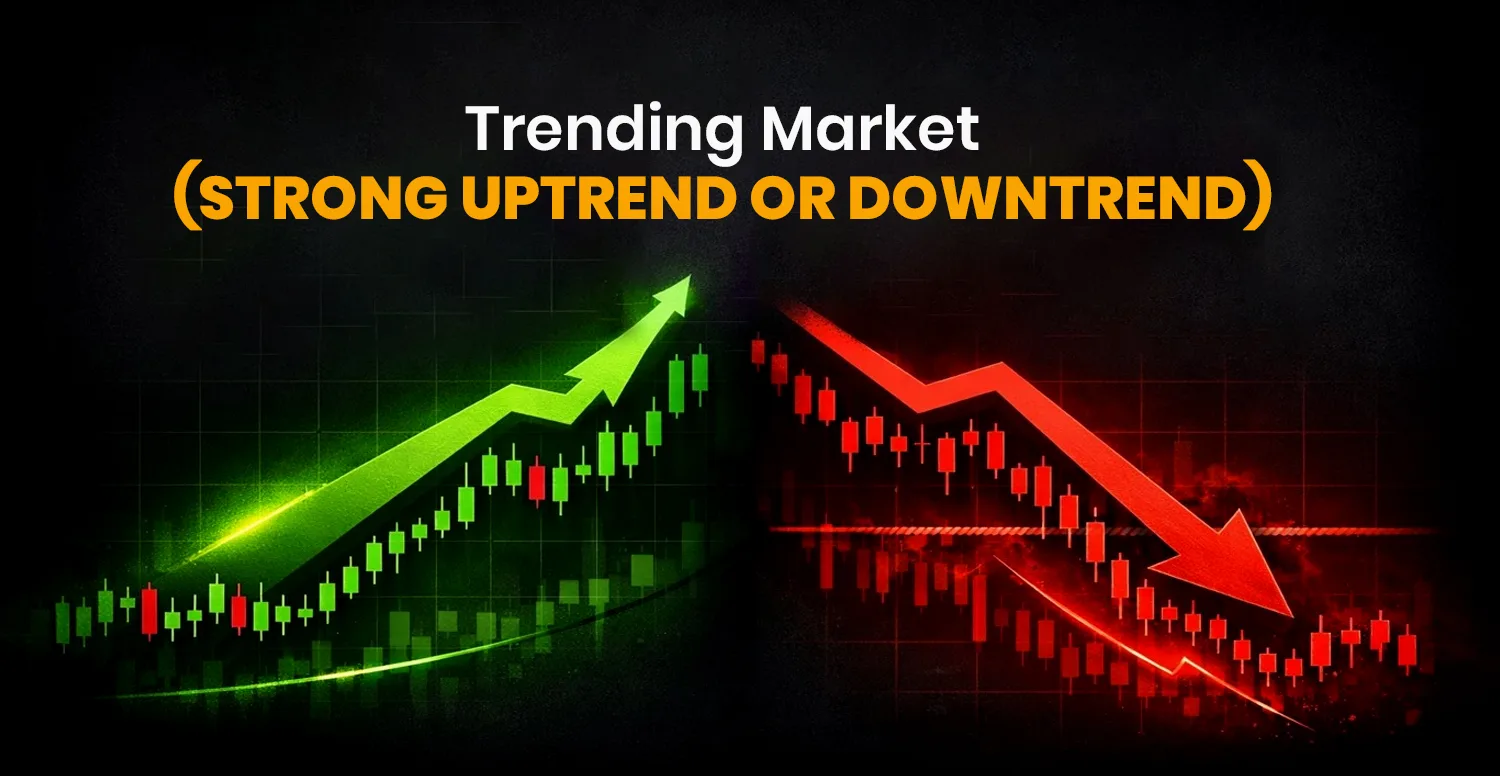
In a trending market:
- Delta becomes the most important Greek
- Options move strongly in the direction of the trend
If you are on the right side:
- Delta helps generate consistent profits
- Gamma accelerates gains as the trend continues
However:
- If you are on the wrong side, losses can increase quickly due to Gamma
Best approach: Directional strategies (buying calls or puts)
Sideways Market (Range-Bound)
In a sideways market:
- Price movement is limited
- Theta becomes dominant
What happens:
- Option buyers lose money due to time decay
- Option sellers benefit from Theta
Best approach: Option selling strategies like straddles or strangles
High Volatility Market
In volatile conditions:
- Vega becomes the key Greek
What happens:
- Option premiums increase due to rising implied volatility
- Sudden spikes can cause large price changes
Best approach:
- Buy options before volatility expansion
- Sell options carefully (higher risk)
Low Volatility Market
In calm markets:
- Option premiums are cheaper
- Vega impact is low
What happens:
- Limited price movement
- Slow premium changes
Best approach:
- Buy options anticipating future volatility increase
- Avoid selling options at very low premiums
Key Insight
- Trending → Delta + Gamma dominate
- Sideways → Theta dominates
- Volatile → Vega dominates
As explained in , option pricing reacts to multiple factors simultaneously, making it essential to adapt strategies based on market conditions.
Professional Edge
Successful traders adjust their approach instead of using the same strategy in every market.
At Lares Algotech, traders can analyze real-time market conditions along with Greek data, helping them select the right strategy for every scenario.
Common Mistakes Beginners Make
Many beginners enter options trading with excitement but without proper understanding. This often leads to consistent losses. Most of these mistakes are directly related to ignoring Option Greeks.
Focusing Only on Direction
The biggest mistake is assuming that:
If the market goes up, I will make money.”
Reality:
- Time decay (Theta) and volatility (Vega) can reduce profits
- Even correct predictions can result in losses
Ignoring Theta Decay
Beginners often buy options and hold them, expecting profits.
But:
- Every day, the option loses value
- Near expiry, this decay accelerates
Result: Premium erosion
Buying Options Near Expiry
Short-term options are cheap but highly risky.
- High Theta decay
- High Gamma risk
- Small time window
Result: Fast losses
Not Understanding Implied Volatility (IV)
Many traders buy options when IV is already high.
After events:
- IV drops (IV crush)
- Option premiums fall sharply
Even with correct direction, traders lose money
Overtrading
Taking too many trades without proper analysis leads to:
- Increased transaction costs
- Emotional decision-making
- Lack of discipline
Ignoring Risk Management
Beginners often:
- Trade without stop-loss
- Risk large capital on single trades
Result: Big losses
Misunderstanding Delta and Probability
Many traders chase high Delta options without realizing:
- Higher Delta = Higher cost
- Higher risk exposure
Key Takeaway
Most beginner losses are not due to bad luck — they are due to lack of understanding.
Ignoring Greeks = Trading blindly
Smart Approach
To succeed in options trading:
- Focus on risk, not just profit
- Understand how each Greek affects your trade
- Use structured strategies instead of random trades
At Lares Algotech, traders are provided with tools and insights that help avoid these common mistakes and build a disciplined trading approach.
Greeks for Buyers vs Sellers
One of the most important distinctions in options trading is understanding how Option Greeks affect buyers and sellers differently. The same Greek can be beneficial for one and harmful for the other.
This is why professional traders always evaluate whether they are better positioned as buyers or sellers based on market conditions.
Core Difference Between Buyers and Sellers
- Option Buyers (Long Positions)
→ Pay premium
→ Need movement to profit - Option Sellers (Short Positions)
→ Receive premium
→ Benefit from stability and time decay
Greeks Comparison Table
| Factor | Buyer (Option Buyer) | Seller (Option Writer) |
| Theta (Time Decay) | Loss (negative impact) | Profit (positive impact) |
| Vega (Volatility) | Benefit from rising IV | Risk from rising IV |
| Delta (Direction) | Depends on market direction | Can use neutral strategies |
| Gamma (Speed of Change) | High risk but high reward | Risk of sudden movement |
Detailed Understanding
Theta Impact
- Buyers lose value daily due to time decay
- Sellers earn from this decay
This is the biggest advantage for option sellers.
Vega Impact
- Buyers benefit when volatility increases
- Sellers suffer losses during volatility spikes
This is why selling options during high volatility is risky.
Delta Impact
- Buyers rely on correct direction
- Sellers can use neutral strategies to reduce directional risk
Gamma Risk
- Buyers gain from fast movements
- Sellers face sudden and large losses if the market moves sharply
Strategic Insight
- Buyers need movement + volatility + timing
- Sellers need stability + time decay + risk control
As highlighted in , successful traders evaluate both risk and reward using Greeks before choosing their position.
Professional Approach
Smart traders do not blindly buy or sell options. Instead, they analyze:
- Market direction
- Volatility conditions
- Time to expiry
At Lares Algotech, traders can compare Greek exposures in real time, helping them decide whether to act as a buyer or seller based on data rather than emotion.
How to Use Greeks in Intraday Trading
Intraday options trading is fast-paced and requires quick decision-making. In this environment, certain Greeks become more important than others.
Key Greeks for Intraday Trading
Delta (Primary Focus)
Delta is the most important Greek for intraday traders.
- Measures price movement
- Helps identify strong directional trades
Traders prefer options with higher Delta for faster price movement.
Gamma (High Importance)
Gamma plays a critical role in short-term trading.
- High Gamma near expiry → rapid price changes
- Ideal for scalping and quick trades
But also increases risk significantly.
Theta (Secondary Impact)
Theta has a smaller impact in intraday trading compared to positional trading.
However:
- Near expiry, even intraday trades can feel Theta pressure
Vega (Limited Impact)
Vega is less important in intraday unless:
- Major news events occur
- Sudden volatility spikes happen
Intraday Strategy Based on Greeks
Focus on High Liquidity Options
Nifty / Bank Nifty options
ATM or slightly ITM strikes
Use Delta for Direction
Choose options with strong Delta for better movement
Monitor Gamma for Speed
High Gamma can provide quick profits
But requires strict risk management
Avoid Theta Traps
- Do not hold positions unnecessarily
- Exit trades quickly
Example
- Nifty breaks resistance
- Trader buys ATM call option
- Delta provides immediate movement
- Gamma accelerates gains
Quick entry + quick exit = effective intraday trade
Key Takeaway
Intraday trading is about:
Speed + Precision + Discipline
Not understanding Greeks can lead to:
- Slow-moving trades
- Unexpected losses
- Missed opportunities
How to Use Greeks in Positional Trading
Positional trading in options is very different from intraday trading. Since trades are held for multiple days or weeks, factors like time decay (Theta) and volatility (Vega) become far more important than just price movement.
Unlike intraday trading, where speed matters, positional trading is about planning, patience, and strategy selection.
Key Greeks for Positional Trading
Vega (High Importance)
Vega plays a major role in positional trades because volatility can change significantly over time.
- Rising volatility → Option premium increases
- Falling volatility → Option premium decreases
Traders must analyze whether volatility is likely to expand or contract.
Theta (Critical Factor)
Time decay becomes a major concern in positional trading.
- Buyers lose value daily
- Sellers benefit from time decay
Holding options for too long without movement can lead to losses
Delta (Directional Role)
Delta still matters, but it is not the only factor.
- Helps identify directional bias
- Works alongside Theta and Vega
Gamma (Moderate Importance)
Gamma has less impact compared to intraday trading, but near expiry, it becomes significant.
Strategy Planning Using Greeks
Choose the Right Expiry
- Longer expiry → Lower Theta decay
- Short expiry → Higher risk
Analyze Volatility Before Entry
- Buy options when IV is low
- Avoid buying when IV is already high
Balance Risk and Reward
- Do not rely only on direction
- Consider time and volatility factors
Example
- Trader expects Nifty to rise over the next 2 weeks
- Buys a call option with sufficient time to expiry
If:
- Market moves slowly → Theta reduces profit
- Volatility drops → Vega reduces premium
Even with correct direction, profits may be limited
Key Takeaway
Positional trading requires:
Direction + Time Planning + Volatility Analysis
Professional Edge
At Lares Algotech, traders can analyze Vega trends, Theta impact, and overall Greek exposure, allowing them to build well-planned positional strategies instead of random trades.
Best Strategies Based on
Option Greeks are not just theoretical concepts — they are the foundation of professional trading strategies. Different strategies are designed to benefit from specific Greek behaviors.
Delta-Based Strategies (Directional Trading)
These strategies focus on market direction.
- Buying calls in an uptrend
- Buying puts in a downtrend
Profit depends on Delta movemen
Delta-Neutral Strategies
These strategies aim to reduce directional risk.
Examples:
- Straddle
- Strangle
Profit comes from volatility, not direction
Theta-Based Strategies (Income Strategies
These strategies benefit from time decay.
Examples:
- Short straddle
- Short strangle
- Credit spreads
Traders earn from premium decay over time
Vega-Based Strategies (Volatility Trading)
These strategies focus on changes in volatility.
- Buy options when IV is low
- Sell options when IV is high
Profit comes from volatility expansion or contraction
Gamma-Based Strategies (Fast Market Moves)
Used in high-momentum markets.
- Scalping strategies
- Short-term trades
Profit from rapid price changes
Strategy Selection Based on Market
| Market Condition | Best Strategy Type |
| Trending | Delta-based |
| Sideways | Theta-based |
| High Volatility | Vega-based |
| Fast Moves | Gamma-based |
Key Insight
No single strategy works in all market conditions.
The best traders adapt strategies based on Greeks and market behavior.
Professional Application
Instead of guessing, traders use Greeks to:
- Build structured strategies
- Control risk
- Improve consistency
As highlighted in , Greeks help traders understand how different factors affect their positions, making strategy selection more precise.
Role of Technology in Understanding Greeks
In modern options trading, understanding Greeks manually is not practical. The calculations behind Delta, Gamma, Theta, and Vega involve complex mathematical models such as Black-Scholes, which are difficult to compute in real time.
This is where technology plays a crucial role.
Manual vs Platform-Based Analysis
Manual Approach (Outdated)
- Requires complex calculations
- Time-consuming
- Not suitable for fast markets
- High chances of error
Technology-Driven Approach (Modern Trading)
- Real-time Greek values
- Instant data updates
- Visual dashboards
- Faster decision-making
Why Real-Time Data Matters
Options prices change every second. Greeks also change dynamically with:
- Price movement
- Time decay
- Volatility shifts
Without real-time tracking, traders cannot accurately assess their positions.
Key Benefits of Technology in Greeks Analysis
Instant Risk Measurement
Traders can immediately see how much risk they are taking.
Strategy Optimization
Platforms allow traders to compare strategies based on Greek exposure.
Faster Execution
Quick decisions backed by data improve trade outcomes.
Better Discipline
Data-driven trading reduces emotional decisions.
Algo-Based Execution
Modern trading platforms also integrate algorithmic execution:
- Pre-defined strategies
- Automatic risk control
- Faster order placement
This ensures consistency and removes human error.
Professional Edge
Today, trading is no longer about intuition — it is about data, speed, and precision.
At Lares Algotech, traders get access to advanced charting tools, real-time Greek insights, and high-speed execution systems that simplify complex data into actionable insights.
Why Beginners Should Learn Greeks Early
Most beginners enter options trading with excitement but without proper knowledge. This often leads to losses, frustration, and eventually quitting the market.
Learning Option Greeks early can completely change this journey.
Builds Trading Discipline
Instead of guessing, traders start making calculated decisions based on data.
Reduces Unnecessary Losses
Understanding Theta and Vega helps traders avoid common traps like time decay and volatility crush.
Improves Strategy Selection
Traders can choose the right strategy based on:
- Market condition
- Volatility
- Time horizon
Enhances Risk Management
Greeks help traders understand:
- Maximum risk
- Potential reward
- Trade sensitivity
Creates Professional Mindset
Traders shift from:
Emotional trading → Systematic trading
Key Insight
The earlier you learn Greeks, the faster you improve as a trader.
At Lares Algotech, beginners are supported with tools and insights that simplify complex concepts, helping them grow into confident and disciplined traders.
Conclusion: From Guessing to Smart Trading
Options trading can be highly rewarding, but only when approached with the right knowledge and discipline. Without understanding Option Greeks, trading becomes nothing more than speculation.
Greeks are the foundation of professional options trading.
They help traders understand:
- How price movement affects options (Delta)
- How risk changes dynamically (Gamma)
- How time reduces value (Theta)
- How volatility impacts pricing (Vega)
When used together, Greeks provide a complete picture of risk and opportunity.
Final Message
Without Greeks = Gambling
With Greeks = Structured Trading
The Real Difference
Beginner traders:
- Focus on direction
- Ignore risk
- Trade emotionally
Smart traders:
- Analyze Greeks
- Manage risk
- Trade systematically
Your Next Step
If you want to grow in options trading:
- Stop guessing
- Start measuring risk
- Use data-driven strategies
At Lares Algotech, traders are empowered with advanced tools, real-time analytics, and fast execution, helping them transition from basic trading to professional-level decision-making.
FAQs
What are Option Greeks in the stock market?
Option Greeks are mathematical tools used to measure how an option’s price reacts to different market factors such as price movement, time decay, and volatility. The main Greeks include Delta, Gamma, Theta, and Vega. These metrics help traders understand the risk and potential reward of their positions. Instead of guessing market direction, traders use Option Greeks to analyze sensitivity and make informed decisions. Understanding Option Greeks is essential for both beginners and experienced traders, as they provide a structured approach to managing risk in options trading.
Why are Option Greeks important for beginners?
Option Greeks are important for beginners because they help avoid common trading mistakes. Most new traders focus only on market direction, but options pricing depends on multiple factors like time decay and volatility. Greeks provide clarity by showing how these factors impact the option premium. By understanding Greeks, beginners can reduce losses, improve strategy selection, and manage risk more effectively. Learning Option Greeks early helps traders move from emotional trading to data-driven decision-making, which is essential for long-term success in the stock market.
What is Delta in Option Greeks?
Delta is one of the most important Option Greeks, measuring how much an option’s price will change when the underlying asset moves by ₹1. For call options, Delta ranges from 0 to 1, and for put options, it ranges from 0 to -1. For example, a Delta of 0.5 means the option price will move ₹0.5 for every ₹1 move in the underlying asset. Delta also indicates the probability of an option expiring in-the-money. Traders use Delta for directional trading, risk management, and selecting appropriate option strikes.
What is Gamma in Option Greeks?
Gamma measures how quickly Delta changes when the underlying asset price moves. It shows the rate of acceleration in an option’s price movement. High Gamma means Delta changes rapidly, increasing both potential profits and risks. Gamma is highest for at-the-money options and near expiry. Traders use Gamma to understand how their position’s risk will evolve during market movements. Ignoring Gamma can lead to unexpected losses, especially in volatile or fast-moving markets, making it a critical Greek for active traders.
What is Theta and why is it called time decay?
Theta measures how much value an option loses as time passes. It is called time decay because options gradually lose their time value as they approach expiry. Theta is usually negative for option buyers, meaning they lose money daily if the market does not move. For option sellers, Theta works as an advantage because they earn from this decay. Time decay accelerates as expiry approaches, making short-term options risky for buyers. Understanding Theta is crucial for planning trade duration and avoiding unnecessary losses.
What is Vega in Option Greeks?
Vega measures how sensitive an option’s price is to changes in implied volatility (IV). When volatility increases, option premiums rise, and when volatility decreases, premiums fall. Vega is particularly important during events like earnings announcements, budget releases, or major news. Long-term options have higher Vega, while near-expiry options have lower Vega. Traders use Vega to benefit from volatility changes and avoid losses caused by sudden volatility drops. It plays a key role in both directional and non-directional trading strategies.
How do Option Greeks work together?
Option Greeks do not work independently; they interact with each other to determine the final option price. Delta measures price movement, Gamma shows how Delta changes, Theta represents time decay, and Vega reflects volatility impact. For example, even if the market moves in your favor, Theta decay and falling volatility can reduce your profits. Successful traders analyze all Greeks together to understand the complete risk profile of a trade. This combined approach helps in making better trading decisions and avoiding unexpected losses.
Can you make money in options without understanding Greeks?
While it is possible to make occasional profits without understanding Option Greeks, it is not sustainable in the long run. Without Greeks, trading becomes speculative and inconsistent. Traders may face unexpected losses due to time decay or volatility changes. Greeks provide a structured framework for analyzing risk and improving decision-making. Professional traders rely heavily on Greeks to build strategies and manage positions. Therefore, learning Option Greeks is essential for achieving consistent and disciplined success in options trading.
Which Option Greek is most important for trading?
Delta is generally considered the most important Option Greek because it measures price movement and directional sensitivity. However, no single Greek is sufficient on its own. Theta is critical for understanding time decay, Vega is essential for volatility analysis, and Gamma helps track risk changes. The importance of each Greek depends on the trading style and market conditions. For intraday trading, Delta and Gamma are more important, while for positional trading, Theta and Vega play a bigger role.
How can beginners start using Option Greeks effectively?
Beginners can start using Option Greeks by first understanding the basics of Delta, Gamma, Theta, and Vega. They should practice analyzing option chains and observe how premiums change with market movements. Using trading platforms that provide real-time Greek data can simplify learning. Beginners should start with simple strategies and gradually incorporate Greek analysis into their decision-making. Consistency, discipline, and continuous learning are key. With proper understanding and tools like those offered by Stock Broker Company In India Lares Algotech, traders can effectively use Greeks to improve performance.